The store will not work correctly when cookies are disabled.
We will be conducting our annual stock take on Friday 31st July, unfortunately we will not be dispatching orders on this day. Deliveries will resume from Monday 3rd August.
For the latest updates regarding the ongoing global situation, please click here
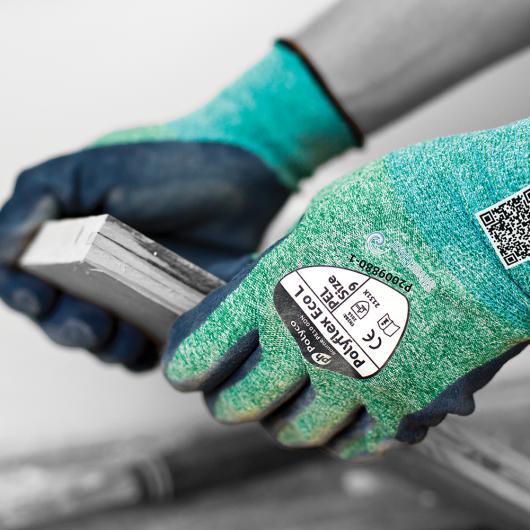
Consumers are becoming increasingly concerned with the environmental impact of the products and services they use, and so there is great demand for products which purport to minimise harm to, or benefit, the environment. This focus on sustainability has led to the proliferation of products with various green claims, however, many of which may mislead consumers and/or exaggerate any environmental benefits. Biodegradation-promoting additives (also referred to as enzyme-mediated biodegradable additives) are claimed to make conventional (typically derived from fossil fuels and non-biodegradable) polymers (such as nitrile) attractive to microorganisms and therefore biodegradable (in landfill conditions) when incorporated with the polymer, thus proposing an end of life solution for non-recyclable polymers (including nitrile gloves). The exact mechanism by which these additives supposedly function is yet to be explained or proven in any publicly available peer-reviewed scientific study
Biodegradable & Compostable: what's the difference?
03 May, 2022
Biodegradable & Compostable: what's the difference?
03 May, 2022
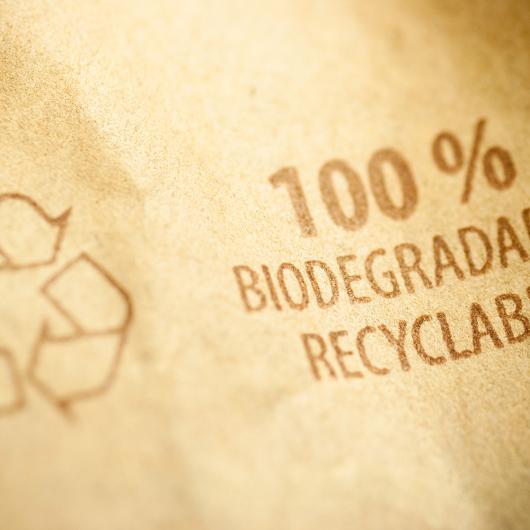
The environment is very much in focus in recent times, and many businesses are looking for ways to reduce the environmental impact of their products and packaging. More and more plastic and polymer products labelled as 'biodegradable' or 'compostable' are coming to market, and they are often presented as an environmentally friendly alternative to conventional oil-derived polymers. This blog will investigate the key differences between biodegradable and compostable products and consider situations where they may or may not represent a beneficial alternative to conventional polymers.
What are biodegradable materials and how are they certified?
Biodegradation is the process of decomposition of organic materials by microorganisms, such as bacteria and fungi.
Biodegradation may be aerobic (with available oxygen, e.g., composting), or anaerobic (with no/limited available oxygen, e.g., landfill). By-products include carbon dioxide, methane (in anaerobic conditions), water, and biomass (or compost).
Plastic Straws, Stirrers and Cotton buds are banned in England from today
01 October, 2020
Plastic Straws, Stirrers and Cotton buds are banned in England from today
01 October, 2020
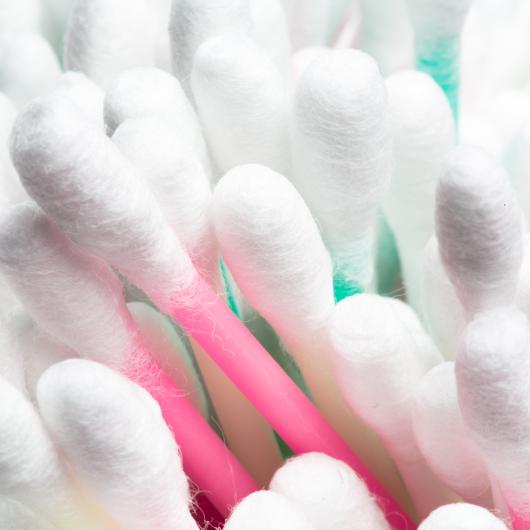
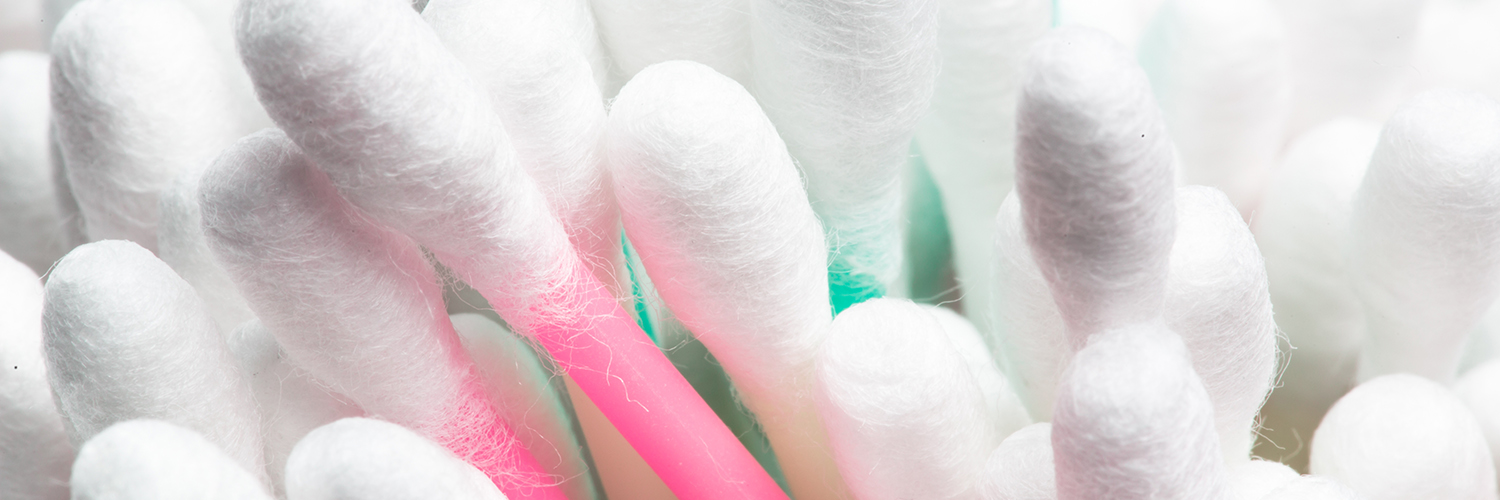
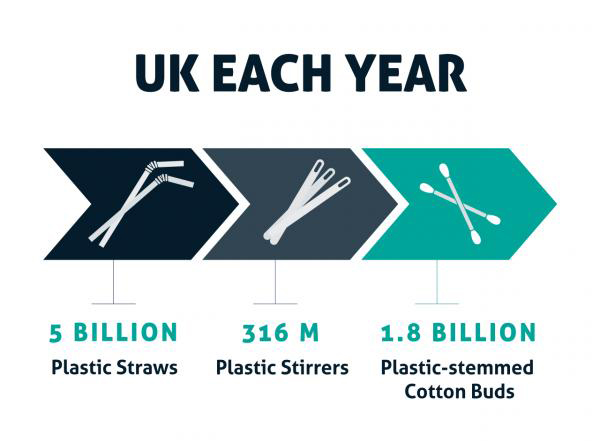
Plastic straws, stirrers and cotton buds are banned in England from today.
The legislation should have come into force in April but was put back because of the coronavirus pandemic.
Following the success of the ban on microbeads and the 5p charge on single-use plastic bags, the proposal to increase the ban to additional single use plastic everyday items such as straws, cotton buds and stirrers was fairly straight forward and due to be effective early 2020.
April had been the original deadline for the new legislation but, coming in the midst of the COVID-19 pandemic and given its impact on supply chains, the government decided to postpone the ban until now.
From today however, it is now illegal in almost all circumstances for businesses to give them out to customers.
The ban on straws, stirrers and cotton buds is just the next step in the battle against plastic pollution and pledges to protect our ocean and the environment for future generations.
We're sorry but there seems to be a problem with your account. Please contact our sales team on 020 8835 3636 or email [email protected] for more information.
You have exceeded your credit limit. Please contact our Accounts Department on 020 8835 3636 to discuss you credit options.
You have exceeded your credit limit. Please contact our Accounts Department on 020 8835 3636 to discuss you credit options.

 EN
EN FR
FR ES
ES DE
DE PT
PT NL
NL CS
CS PL
PL DA
DA IT
IT RO
RO FI
FI NO
NO SV
SV